
Make Learning Visible With The Learning Canvas
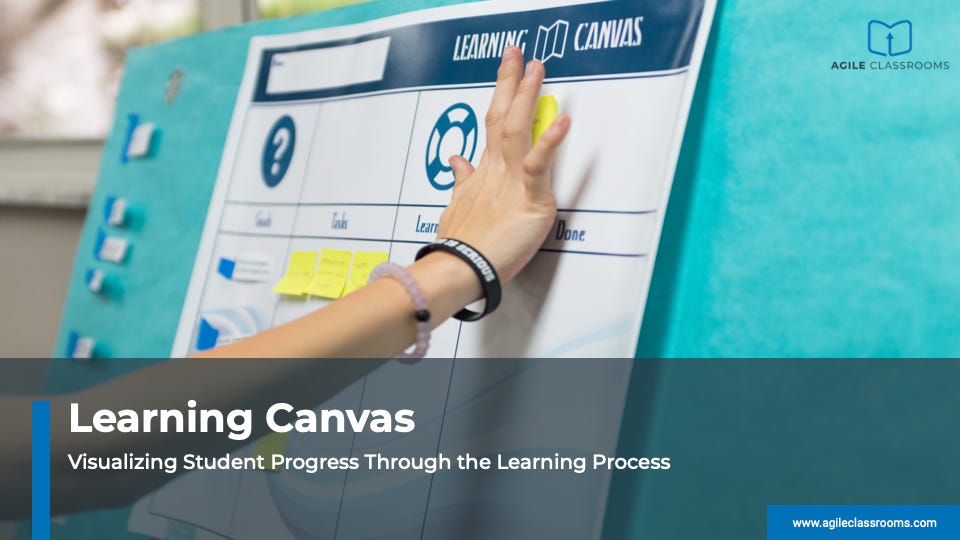
Introducing the Learning Canvas - a tool that helps students track their progress and make learning visible. With columns representing each step of the learning process, teachers and students can use cards or sticky notes to move their work from one part

What is the Learning Canvas
Make learning visible with the Learning Canvas. It helps students track their progress as they move through an explicit learning process. The board has different columns representing each step of the learning process. Teachers and students can use cards or sticky notes to move their work from one part of the learning workflow to the next. This helps everyone stay organized and on track. The Learning Canvas is an excellent way for teachers to foster collaboration and responsibility among their students, and it can be more engaging than traditional worksheets and logs.
The 3Ps of the Learning Canvas
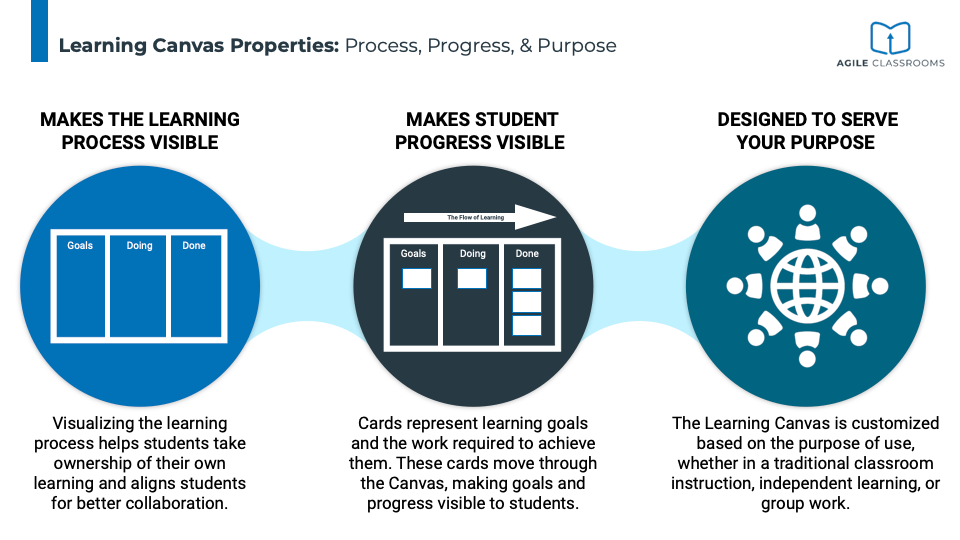
A Learning Canvas has three properties; it (1) visualizes the learning process, (2) visualizes the progress of student learning, and (3) is designed to fit the purpose it is being used.
Make the Learning Process Visible
The Learning Canvas is a customizable visual representation of the learning process. Each step of the learning workflow is represented as a column on the canvas, such as Goals | Tasks | Doing | Done. Innovative teachers like you have seen these benefits of using the Learning Canvas:
For students, it creates clarity around how they learn. Clarity gives a sense of control. A sense of control increases confidence and reduces anxiety.
For teachers, it allows them to quickly see where students are in the process and provide support where and when needed.
A shared and visible process supports student collaboration. It serves as agreement about how student groups get work done.
It scaffolds self-direction. By modeling the learning process, students can internalize it. Students must apply an effective learning process to be successful at self-direction.
It creates safety when growing self-direction. Like lanes on a highway, the Learning Canvas can serve as guard rails to help students navigate their learning journey with freedom and confidence.
By making the learning process transparent, you can inspect and improve it.
Make Student Progress Visible
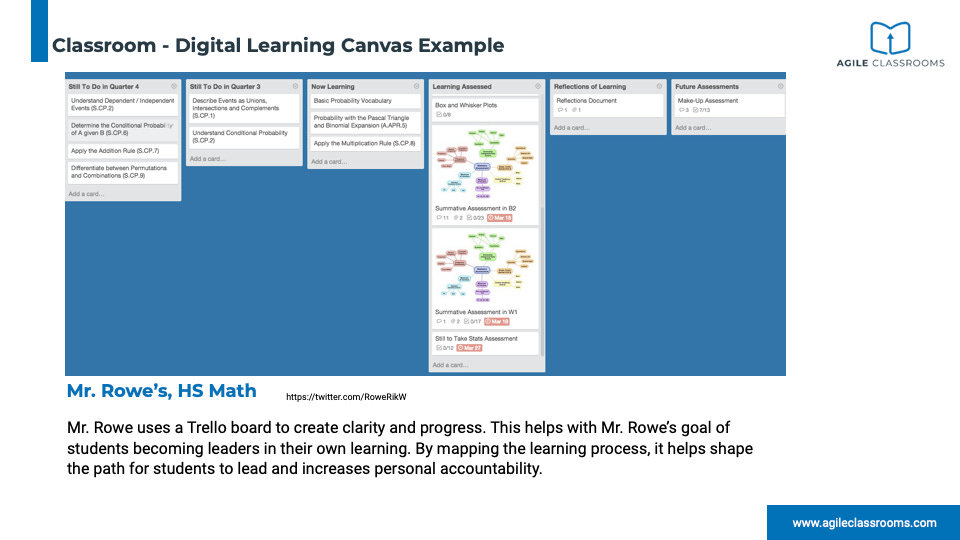
Teachers and students can now begin to use the Learning Canvas to track their progress by placing cards on it. The cards represent the work and learning that flows through each step of the process, and the most common card types are Learning Goals and Tasks. However, you can also use other types of cards, such as skills, project deliverables, problems, or anything else you want to visualize and track. The Learning Canvas offers endless possibilities for tracking progress.
As students and teachers move their cards through each step on the canvas, it provides them with a clear visual representation of their progress. This can empower and motivate students and promote focus and accountability. The Learning Canvas allows everyone to see learning in motion.
Fit For Your Purpose
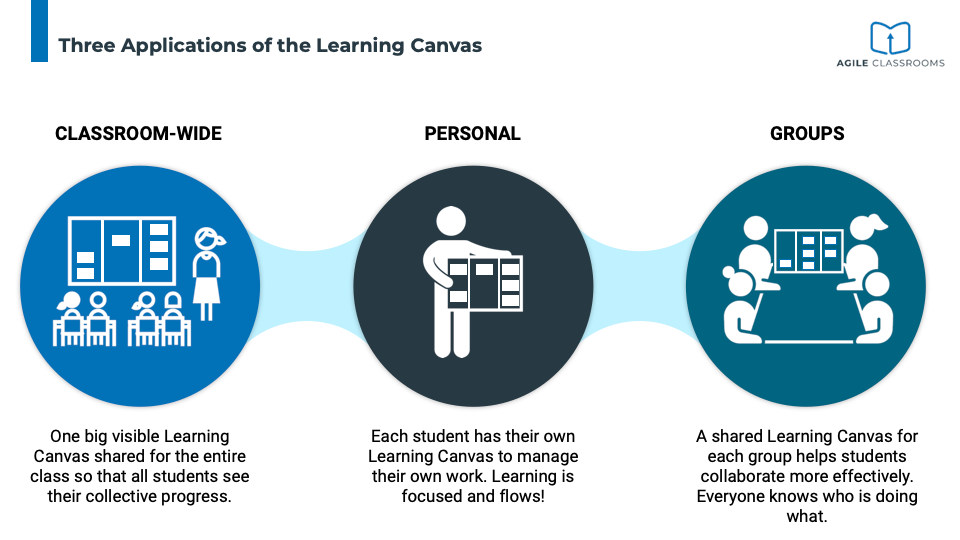
The Learning Canvas can be used in various ways depending on the purpose it is being applied for. Some common applications include:
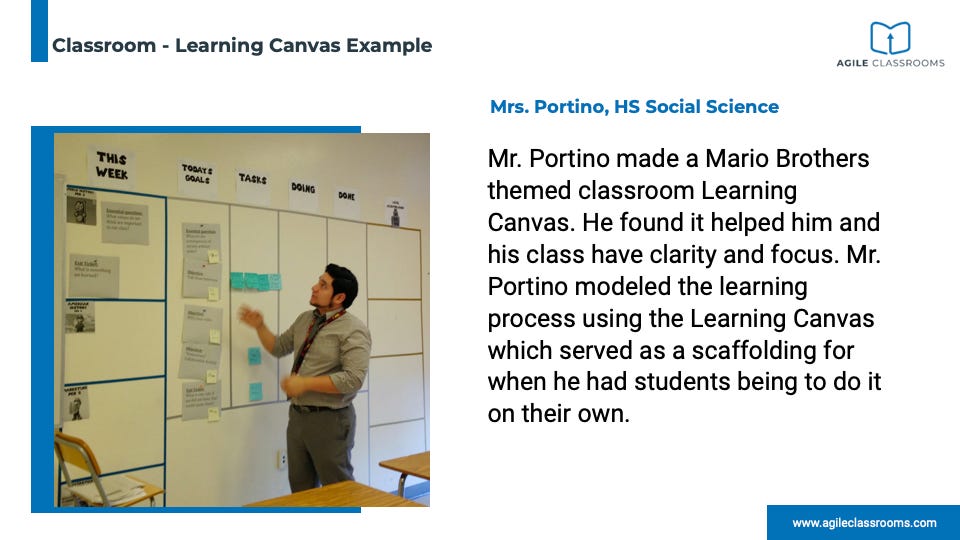
Classroom-wide: A shared, visible Learning Canvas for the entire class allows all students to see their collective progress and helps foster collaboration. It can also make it easier for teachers to monitor and support student progress.
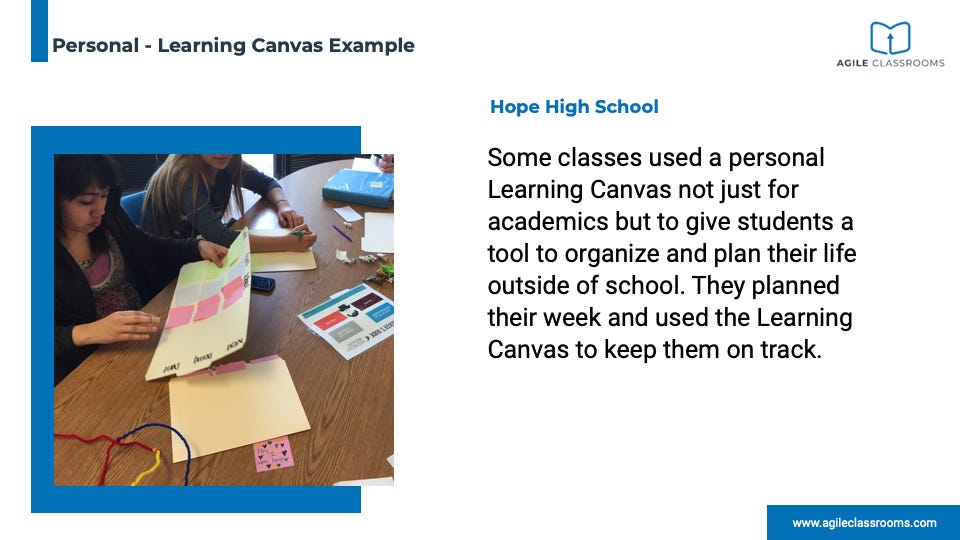
Individual Students: Each student can have their own Learning Canvas to help them focus and manage their work more effectively.
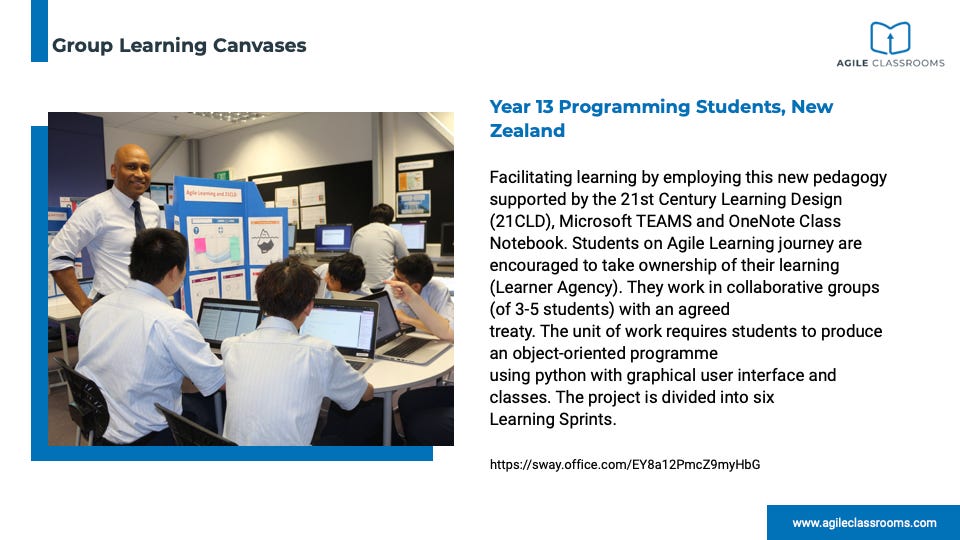
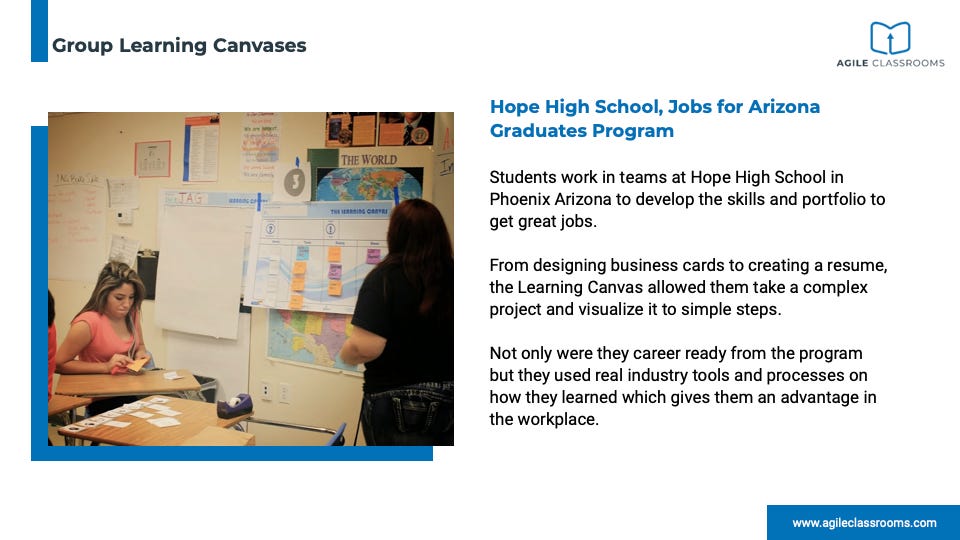
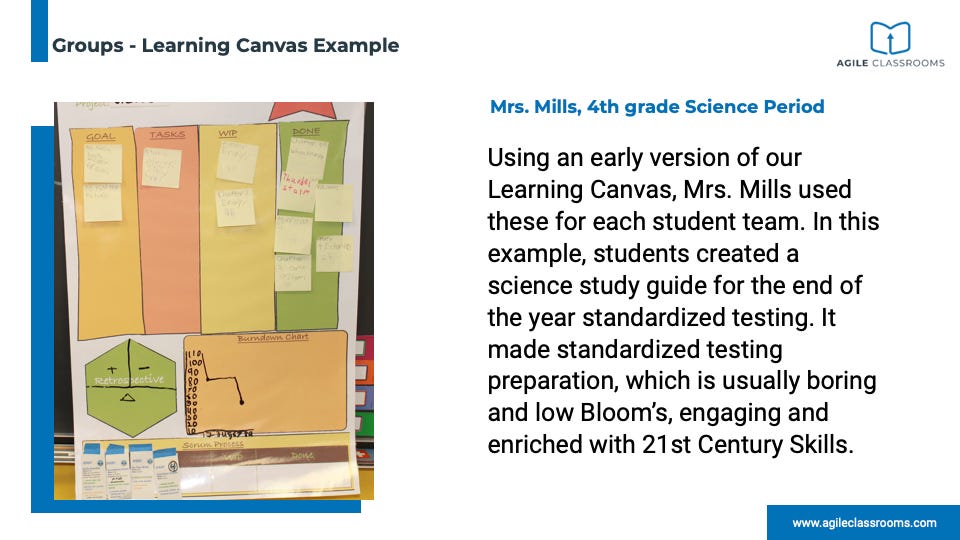
Student Groups: Student groups can use a shared Learning Canvas to see what everyone is doing and who is responsible for each part of the project. This helps them work together and ensure they're all on the same page.
The Learning Canvas With The Self-Directed Learning Routines
The Learning Canvas may be used on its own to bring clarity and focus to the learning process. However, if you aim to increase the ability of students to lead their own learning, you can pair it with the five Self-Directed Learning Routines. In particular, the Planning Routine and the Check-In Routine amplify the benefits of the Learning Canvas. We suggest reading both of these articles to learn more about how the Learning Canvas can be used to support self-directed learners.
Learning Canvas Examples
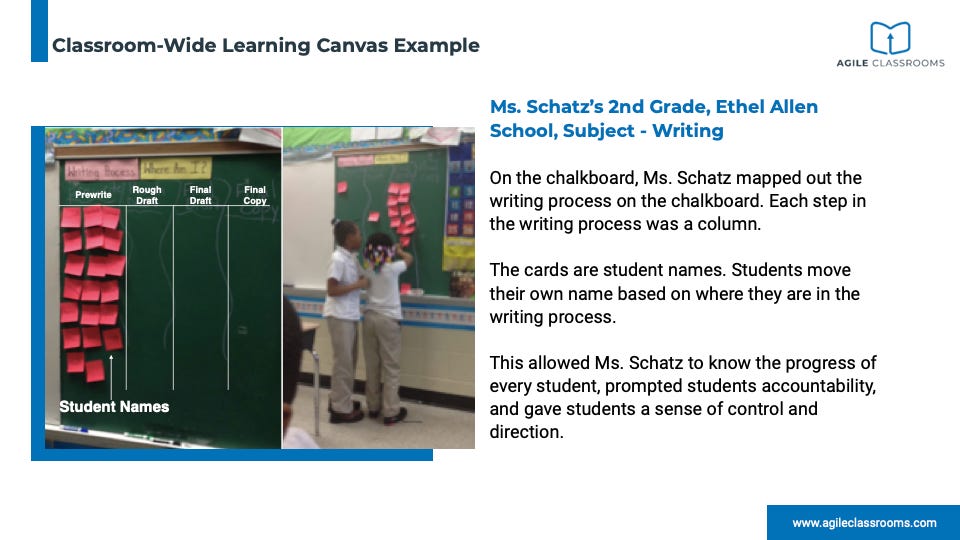
Here are some examples of how the Learning Canvas can be used to make learning visible:
DOWNLOAD THE LEARNING CANVAS
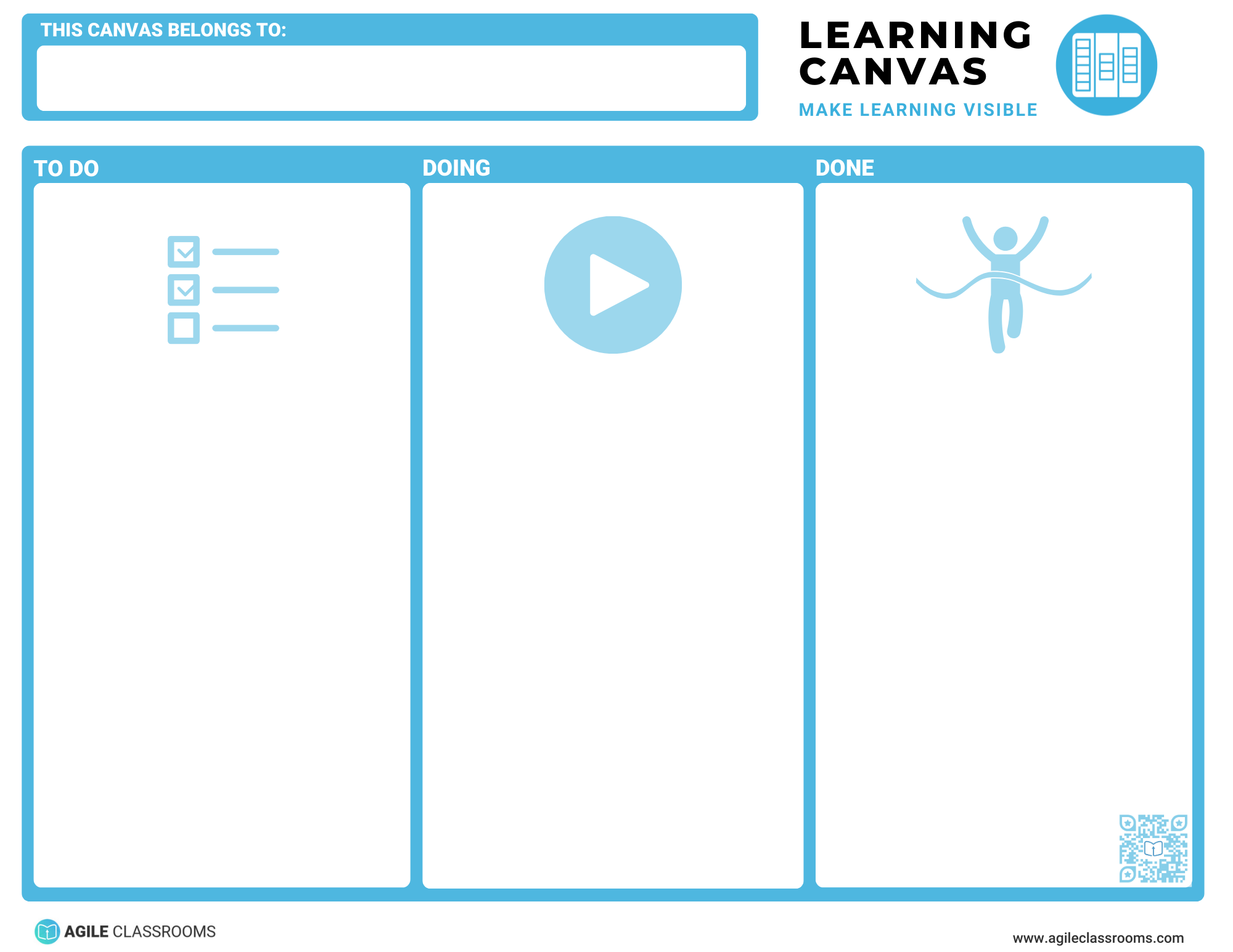
We have several Learning Canvases to get you started. This Learning Canvas is our simplest version. It is flexible and simple enough for most contexts with a simple To Do | Doing | Done workflow.
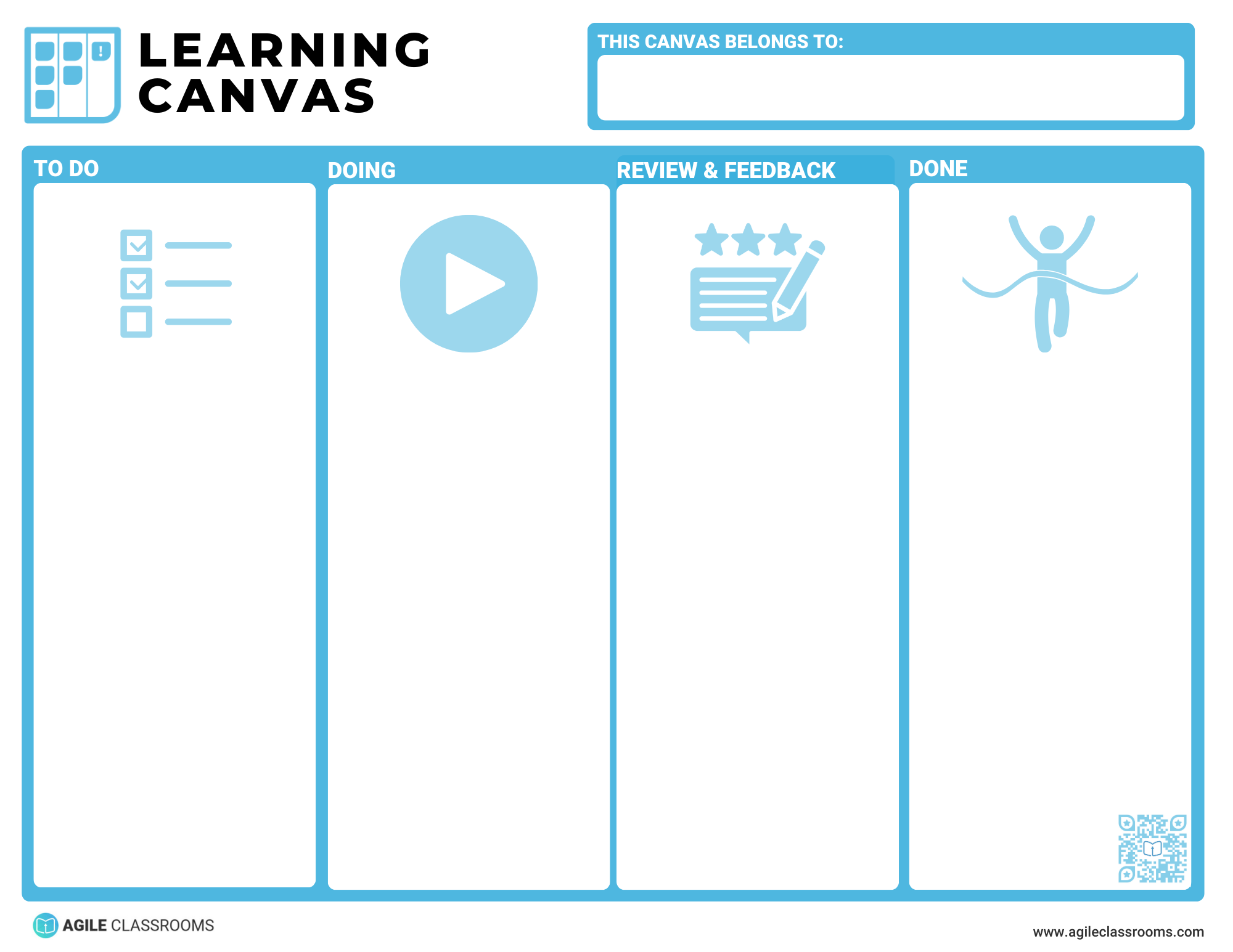
The next one we add a Review & Feedback column to the workflow to signal when work needs to be reviewed or given feedback by someone. Teachers love this addition.
The next one is more detailed and robust.
This Learning Canvas brings Goals and Tasks into your workflow, perfect for planning your work from finish to start with backward design.
The top Power Bar breaks down into four sections:
Key Focus: Scribble down your guiding lights here - the essential questions, big ideas, and relevant statements that lead the learning and projects to something bigger.
Feedback: Unsure about something? This is your go-to spot for seeking advice and making things shine. It's all about improving and refining as you go.
Skills Focus: Beyond knowledge, this area is all about action. Here, you decide on the real-world skills you'll focus on and develop. It's your training ground for real-life challenges.
Roadblocks: Hit a snag? Note down anything blocking your path here. It's about identifying challenges early and tackling them as a team, so nothing holds you back.
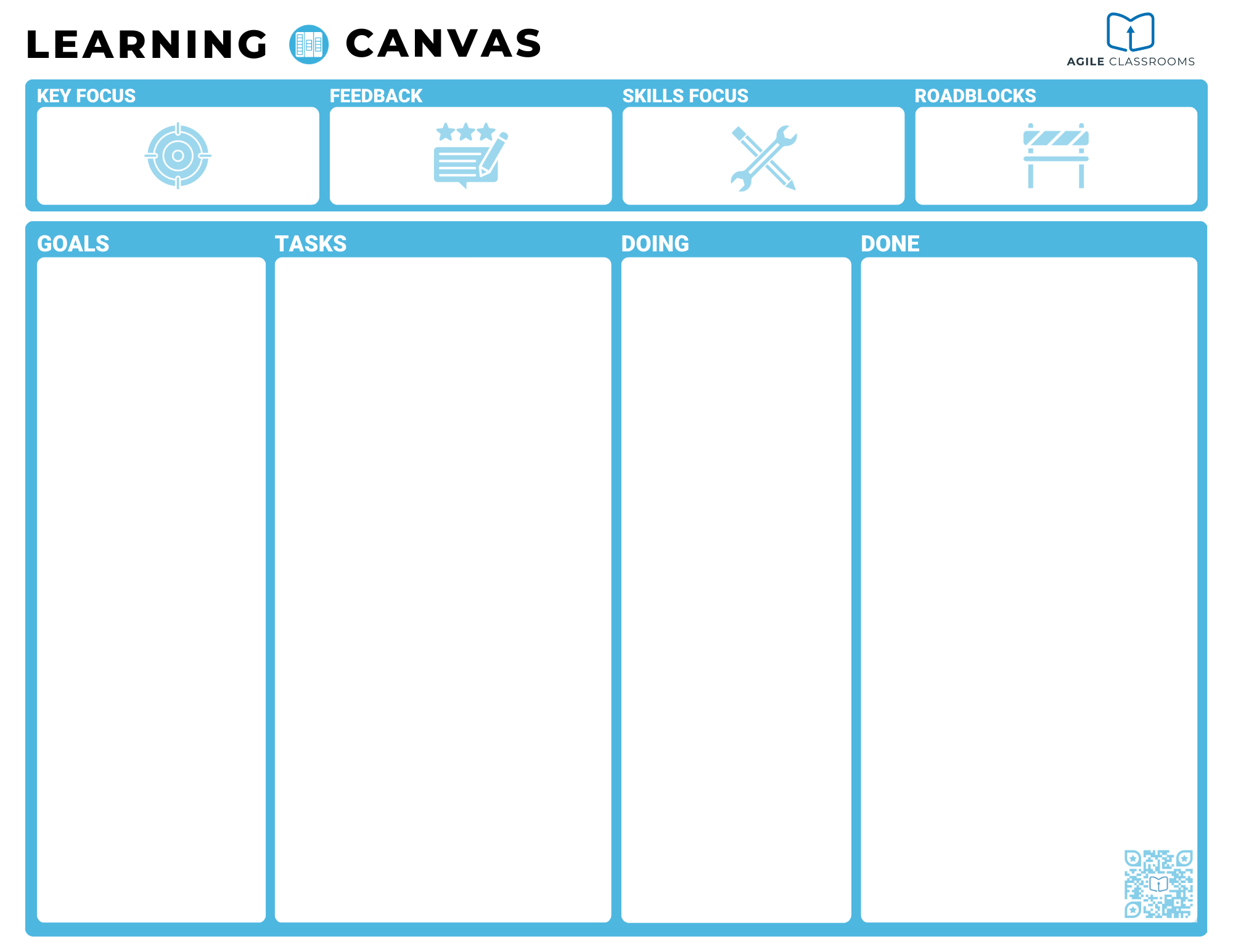
Download these and more versions for free, our most popular resource.

THREE THINGS YOU CAN DO NEXT
LOOK at our free resources for edcuators like the Learning Canvas and the Agile Educator Guide. Sign up for exclusive access today, then
LEARN how to grow an Agile Classroom by attending our Certified Agile Classroom Teacher workshop, then
LEAD in integrating real-world 21st-century skills for your students so they can thrive in learning and life. Agile Classroom gives you the how so you can achieve your big why.
A TECHNICAL NOTE
The Learning Canvas is a tool for visualizing learning and organizing work. It is not a Scrum Board or a Kanban Board, as these terms refer to specific frameworks used in the corporate world. While we may borrow from frameworks like Scrum and Kanban, our approach is not limited to these methods, and we tailor solutions to the specific needs of a K12 classroom. The Learning Canvas is a powerful tool for organizing and managing work to support student learning and personal growth.